Cathode Ray Tube Amusement Device vs OXO
Side-by-side comparison of features, pricing, ratings, and alternatives.


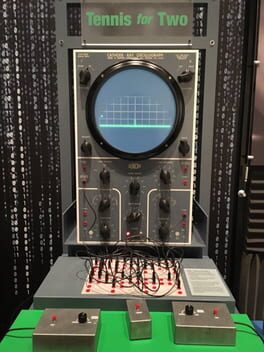
The Cathode Ray Tube Amusement Device, created in 1947 by Estle Ray Mann and Thomas T. Goldsmith, Jr., is the earliest known interactive electronic game using a CRT. Players manipulate a control knob to move a visible dot on the screen, aligning it with a moving airplane target before firing a button to simulate an explosion. Its purely electromechanical design contains no memory, computer, or programming, relying entirely on analog signal strength and mechanical coordinates to determine hits, making it a unique piece of gaming history.
OXO is a historic computer game created in 1952 by Alexander S. Douglas for the EDSAC computer. It simulates a game of Noughts and Crosses (tic‑tac‑toe) and is the earliest known title to display graphics on a video monitor. Players interact using a rotary telephone controller while the 35×16 dot‑matrix CRT shows the board and the AI opponent's moves. Today it can be experienced on modern PCs via emulation, offering a glimpse into early interactive computing and AI.
- Pioneering use of CRT technology
- Purely analog gameplay offers a unique tactile experience
- Historical significance as the first electronic game
- Simple controls make it easy to understand
- Shows the origins of video game graphics.
- Simple yet strategic gameplay.
- Historical significance as the first visual computer game.
- Free and runs on modern PCs via emulation.
- Limited visual feedback compared to modern games
- No replayability beyond the single target scenario
- Requires specialized hardware to experience authentically
- Very limited visual fidelity by today's standards.
- Input method (rotary phone) is simulated and may feel unintuitive.
- Single‑player only; no multiplayer mode.
More alternatives & similar tools
Alternatives to Cathode Ray Tube Amusement Device
View all →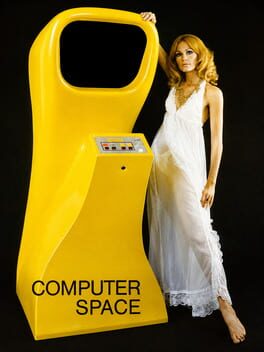
The first commercial coin‑operated video game that launched arcade shooting in space