


Elite vs Frontier: Elite II
Side-by-side comparison of features, pricing, ratings, and alternatives.
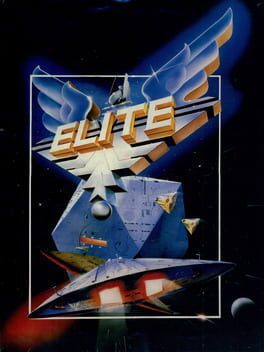

Elite is a groundbreaking 1984 space trading game that introduced open‑ended gameplay, wire‑frame 3D graphics with hidden line removal, and a deep economy system. Developed by David Braben and Ian Bell, it lets players travel between star systems, trade goods, and hunt for a combat rating high enough to become an "Elite" pilot.
Frontier: Elite II puts you in command of a starship with limited funds, letting you trade, fight, hunt criminals, or serve governments across an astronomically large universe. The game offers virtually unrestricted freedom to travel to any of the roughly 100 billion planets and moons, making each journey unique. Its open‑world design and deep simulation mechanics deliver a timeless space adventure that rewards curiosity, skill, and strategic planning, all within a single‑player experience.
- Pioneering 3D graphics for its era
- Open‑ended sandbox gameplay
- Deep trading and combat systems
- Rich sci‑fi lore and legacy
- Massive, explorable universe
- Deep economic and trading systems
- Realistic flight and combat physics
- High replayability
- Steep learning curve for new players
- Primitive sound and UI by modern standards
- Limited save slots in original versions
- Steep learning curve for new players
- Outdated graphics by modern standards
- Limited documentation and tutorials
More alternatives & similar tools
Alternatives to Elite
View all →

Alternatives to Frontier: Elite II
View all →
Explore the vast verse, trade, fight, and live out your sci-fi dreams in this open-world space MMO.
The Verdict
AI-generated from listing dataFrontier: Elite II offers a vastly larger, more detailed universe with realistic physics, while Elite provides the historic, pioneering 3‑D wire‑frame experience with a smaller scope.
Key differences
- •Universe size: Elite II claims ~100 billion bodies; Elite’s galaxy has only hundreds of stars.
- •Graphics: Elite II uses modern (1993) 2‑D/3‑D graphics; Elite uses primitive wire‑frame graphics.
- •Physics: Elite II features Newtonian flight physics; Elite has basic movement without realistic physics.
- •Release era: Elite II (1993) includes more advanced UI and content; Elite (1984) is an early classic with limited UI and sound.
Gameplay & fun factor
Elite II adds realistic Newtonian flight, dynamic economy, and varied missions, expanding gameplay depth beyond Elite’s basic trade/combat.
Platform availability
Elite has been ported to dozens of platforms; Elite II is listed only for its original PC release.
Price & value
Both are one‑time paid titles; specific price for Elite not provided, so value cannot be compared.
Multiplayer / co‑op
Both are single‑player only.
Content & replayability
Elite II’s procedurally generated universe of ~100 billion bodies and dynamic economy give far higher replay potential.
Difficulty & accessibility
Elite’s simpler graphics and controls may be easier for newcomers despite a steep learning curve noted for both.
Graphics & performance
Elite II’s 1993 graphics are more advanced than Elite’s 1984 wire‑frame visuals.
Choose Elite if…
Fans of classic retro space sims who value historic significance and broad platform support.
Choose Frontier: Elite II if…
Players wanting deep simulation, realistic physics, and massive exploration.
Common questions
Which game has a larger universe to explore?
Elite II claims about 100 billion celestial bodies; Elite’s galaxy contains only hundreds of stars.
Do either of the games support multiplayer?
Both are single‑player only.
Is the price different between the two titles?
Both are one‑time purchases; Elite’s exact price is not specified, while Elite II is listed at $49.99.