


Epsilla vs Gemini Enterprise Agent Platform
Side-by-side comparison of features, pricing, ratings, and alternatives.

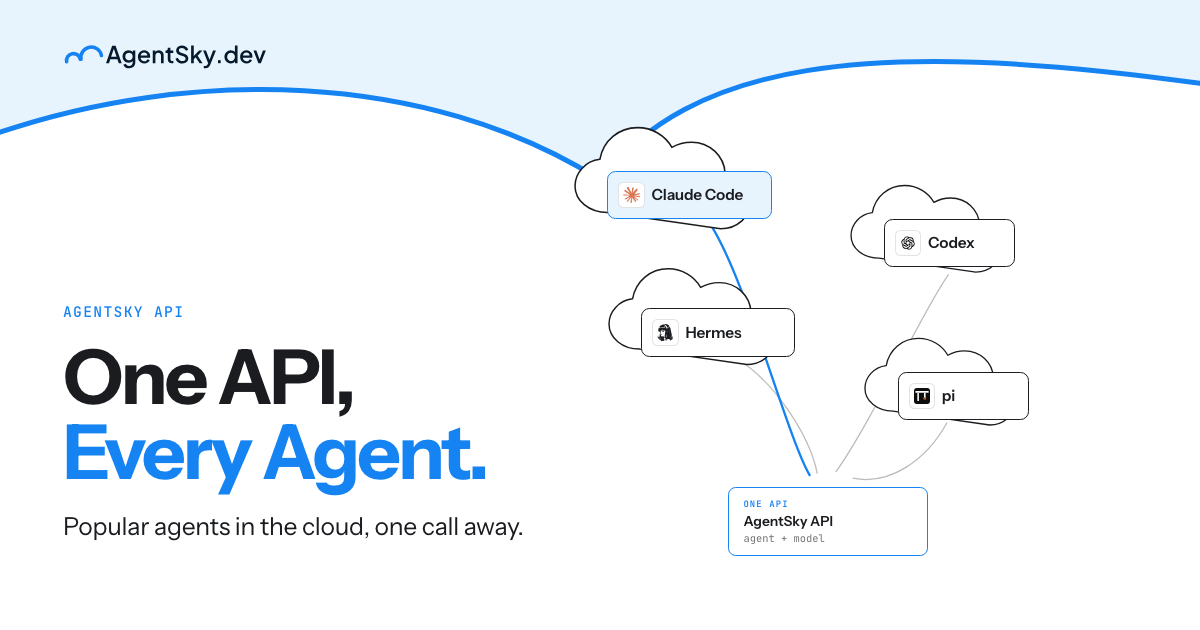
Epsilla is an enterprise-grade Agent-as-a-Service platform designed to help organizations build and deploy vertical AI agents without managing complex infrastructure. The platform combines a no-code AI agent builder, RAG as a Service, and comprehensive agent management tools, making it accessible to both technical and non-technical teams. It is positioned as a solution for creating domain-specific assistants powered by enterprise knowledge and private data. At its core, Epsilla runs on HarnessRouter, a unified runtime layer for agent harnesses. This allows users to run Codex, Claude Code, Hermes, DeepSeek, Qwen Code, and more through a single Agent API, with serverless sandboxes, sessions, streaming, files, and cost controls handled automatically. Epsilla also supports flexible deployment options including managed SaaS, on-premise installation, and private cloud, along with enterprise-grade multi-tenancy, granular permissions, and SOC 2 Type 1 certification. Epsilla targets a wide range of industries, including manufacturing, healthcare, financial services, legal, construction, publishing, education, and inbound sales. Customers such as Stanford Medicine, Samsung E&A, TigerGraph, Enigma, and MTR use the platform to build knowledge-based chatbots, streamline research management, improve customer support, and automate document processing. The platform is especially suited for enterprises that want to deploy AI agents quickly without needing a large engineering team.
Gemini Enterprise Agent Platform is a Google Cloud platform that enables businesses to build, deploy, and govern AI agents and machine learning (ML) models. It provides a comprehensive set of tools and services for managing the entire AI/ML lifecycle, from data preparation to model deployment and monitoring.
Epsilla offers a free tier, monthly subscription plans at $29/month, $249/month, and $2,499/month, plus a custom-priced Enterprise tier.
- No-code visual builder lets non-technical teams create sophisticated AI agents.
- RAG as a Service makes it easy to ground agents in enterprise knowledge bases without managing vector infrastructure.
- HarnessRouter integration provides one API to run and switch between leading agent harnesses like Codex and Claude Code.
- Flexible deployment options include managed SaaS, on-premise, and private cloud.
- Scalable and secure platform for building and deploying AI/ML models
- Collaborative features for team members and stakeholders
- Automated machine learning capabilities for non-experts
- Integrates with other Google Cloud services
- Specific pricing is not detailed on the homepage, so cost transparency requires visiting the pricing page or contacting sales.
- Data source connectors and the complete list of supported LLMs and embedding models are not fully documented on the homepage.
- Dependence on third-party harness and LLM providers may introduce external service variability.
- Some advanced enterprise features and industry-specific customization may require a sales conversation rather than fully self-serve setup.
- Requires Google Cloud account and subscription
- Steep learning curve for non-experts
- Limited customization options for some features
More alternatives & similar tools
Alternatives to Epsilla
View all →

Alternatives to Gemini Enterprise Agent Platform
View all →


The Verdict
AI-generated from listing dataGemini Enterprise Agent Platform offers a full ML lifecycle on Google Cloud with strong enterprise support, while Epsilla provides a no‑code, multi‑tenant AI agent builder with flexible deployment and SOC 2 compliance.
Key differences
- •Gemini requires a Google Cloud account and focuses on end‑to‑end ML model management; Epsilla is a no‑code AI‑agent platform with RAG as a service.
- •Epsilla includes a visual drag‑and‑drop builder and multi‑tenancy out of the box; Gemini has a steeper learning curve and limited customization.
- •Pricing models differ: Gemini is a one‑time paid license, whereas Epsilla offers a freemium tier and subscription plans.
- •Gemini integrates tightly with Google Cloud services; Epsilla integrates with many LLM harnesses and offers on‑premise/private‑cloud deployment.
- •Support: Gemini provides 24/7 phone, email, and live‑chat; Epsilla’s support options are not specified.
Pricing & value
Epsilla offers a free tier and tiered subscriptions, giving lower entry cost versus Gemini's one‑time paid license.
Ease of use / learning curve
Epsilla’s no‑code visual builder targets non‑technical users; Gemini is noted as having a steep learning curve.
Features & depth
Gemini covers full ML lifecycle; Epsilla provides extensive agent, RAG, and multi‑tenancy features—each excels in different areas.
Integrations & ecosystem
Gemini integrates with Google Cloud services; Epsilla supports many LLM harnesses and multiple deployment options.
Collaboration
Both platforms offer team collaboration—Gemini via centralized platform, Epsilla via multi‑tenancy and granular permissions.
Scalability
Both are cloud‑based and designed to scale; Gemini on Google Cloud, Epsilla with scalable infrastructure and SaaS/on‑prem options.
Support
Gemini lists 24/7 phone, email, and live‑chat support; Epsilla’s support details are not provided.
Choose Epsilla if…
Teams wanting no‑code AI agents, RAG services, and flexible deployment with SOC 2 compliance.
Choose Gemini Enterprise Agent Platform if…
Enterprises needing end‑to‑end ML model management and deep Google Cloud integration.
Common questions
What is the cost entry point for each platform?
Gemini requires a one‑time paid license; Epsilla offers a free tier and subscription plans starting at $29/month.
Can non‑technical users build AI agents on both platforms?
Epsilla provides a no‑code visual builder for non‑technical users; Gemini has a steep learning curve and is less suited for them.
How do the platforms handle data security and permissions?
Gemini uses fine‑grained permissions within Google Cloud; Epsilla is SOC 2 Type 1 certified with granular multi‑tenant permissions.