


Wren AI
One governed data agent for your team and AI agents, across any database.

What is Wren AI?
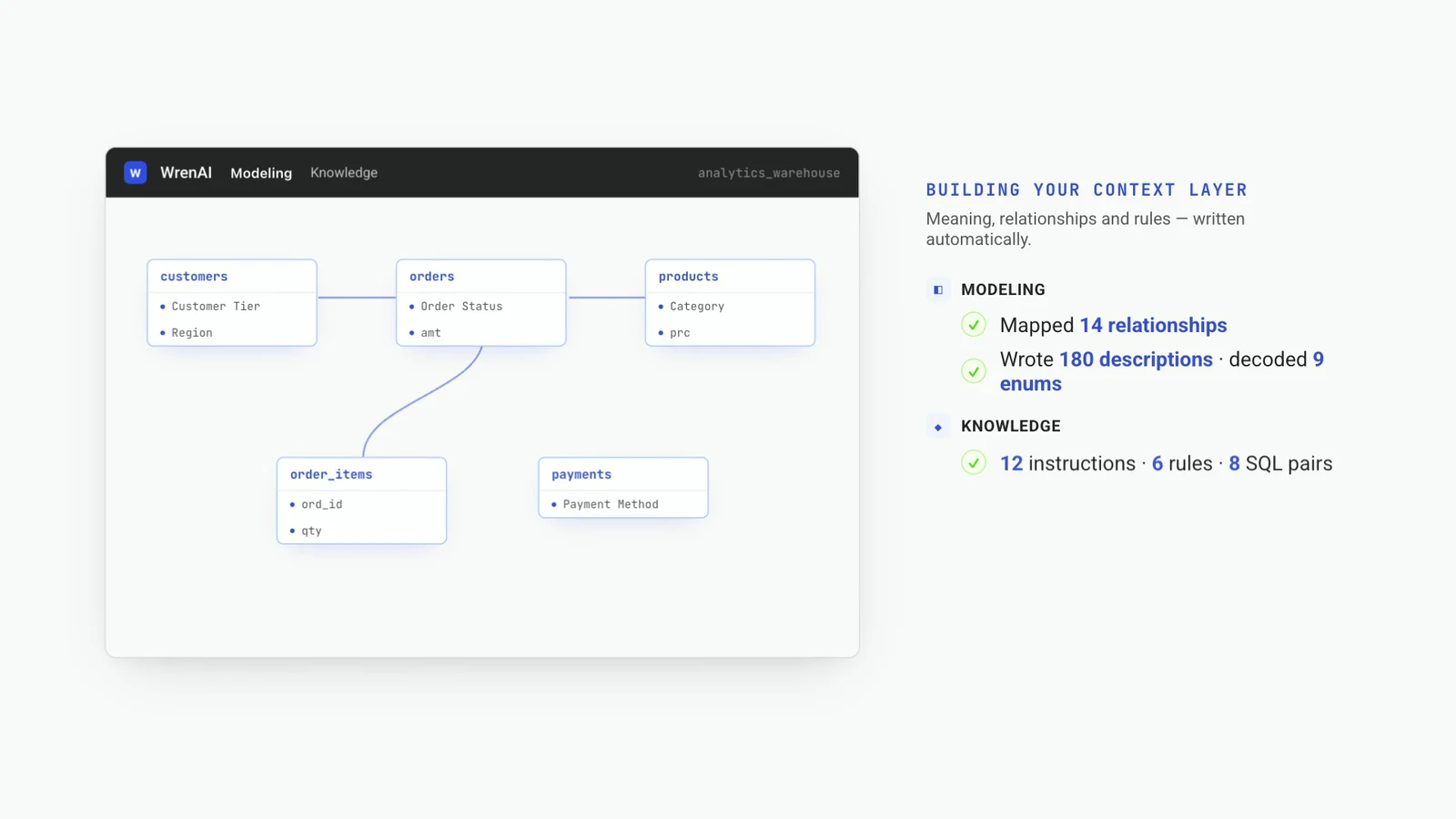
Wren AI is a governed data agent platform that gives both human teams and AI agents a single, consistent way to ask questions across enterprise data. Instead of treating text-to-SQL as a simple tool call, Wren runs GenBI agents in an isolated sandbox where it reasons over versioned context (MDL definitions, knowledge and skills) before generating SQL. The result can be rendered as charts, dashboards or structured JSON, with every query traceable and governed by row- and column-level policies. Wren's key differentiator is the context layer it calls "definitions you own." Teams define metrics, policies and semantic models in git, then share them with both natural-language chat interfaces and AI assistants such as Claude, ChatGPT and Gemini over MCP. Because both paths use the same context and policy layer, answers are consistent and auditable - Wren even fingerprints results so a human and an agent can confirm they are looking at the same answer. On the deployment side, Wren connects to 20+ databases in place with no ETL, and can run in Wren AI Cloud, your VPC, or fully air-gapped. The core context engine is open source, while commercial tiers add agentic dashboard mode, git sync and advanced governance. It is aimed at data teams and product/platform teams who need governed self-service analytics and a way to make AI agents safe to use on internal data.
SpecificationsAI-estimated
Key Features of Wren AI
Use Cases for Wren AI
Self-service analytics for business teams
Non-technical team members can ask questions in plain language and get governed answers without writing SQL.
Governed AI agent access
Claude, ChatGPT, Gemini or internal agents can query company data through Wren's MCP server with consistent policy enforcement.
Automated dashboard generation
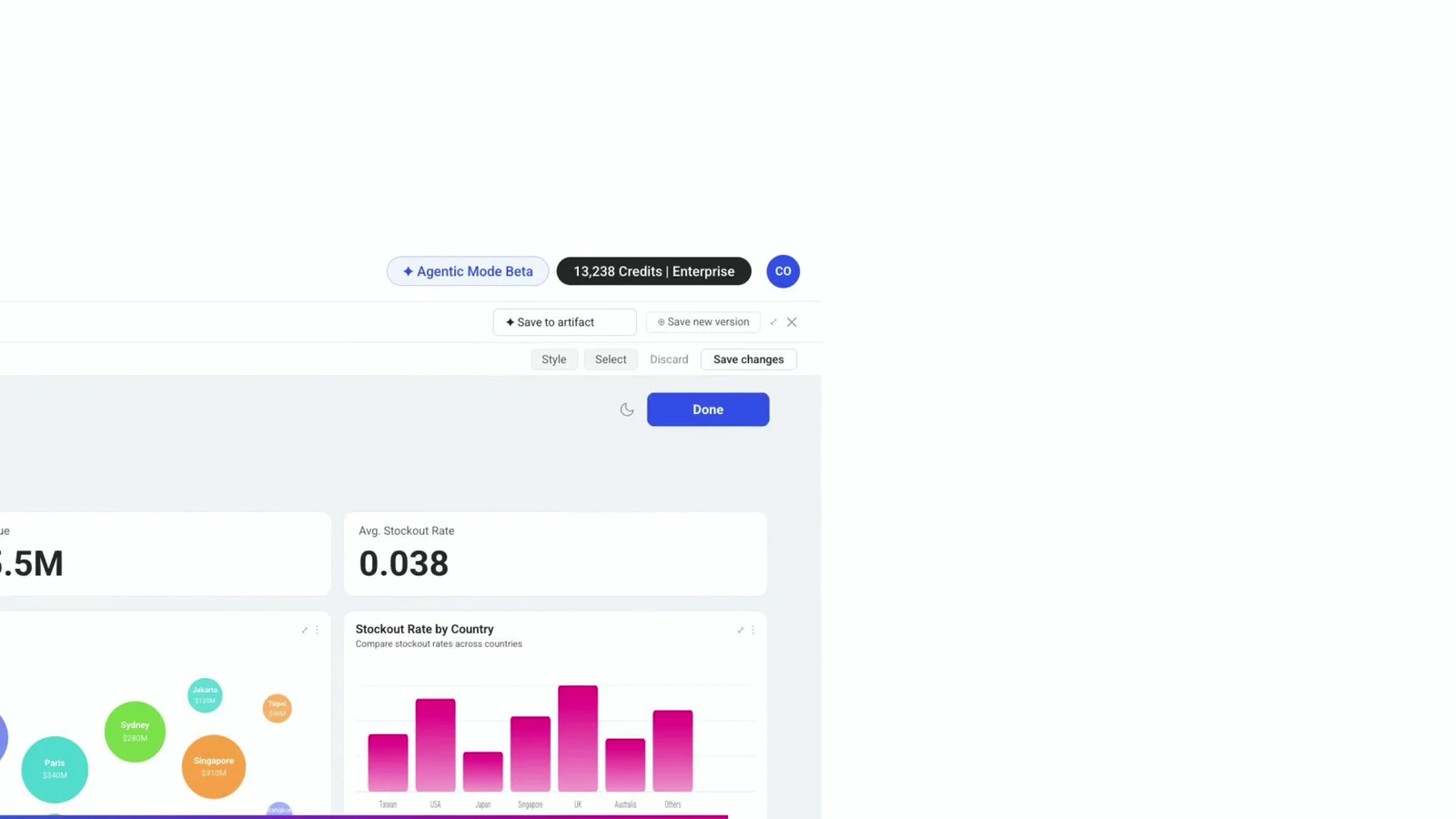
GenBI Apps turns one prompt into a live dashboard with drill-down, roll-up, and filters.
Embedded analytics in products
SaaS teams can embed Wren under their brand with signed JWTs and row/column scoping.
Operational monitoring via chat
Slack and Teams users can ask for metrics and get answers without leaving chat.
Financial and marketing analysis
CFOs, CMOs and analysts can model budget variance, marketing mix, stockout risk and board-level metrics.
How to use Wren AI?
Connect your data source
Select from 20+ connectors like Snowflake, BigQuery or Postgres and authorize Wren to query in place with no ETL.
Define your context layer
Use the onboarding agent or define MDL metrics, policies and knowledge in git so Wren understands business terminology and access rules.
Ask in natural language
Start asking questions in Wren's GenBI chat, or call it from Claude/ChatGPT/Gemini via MCP.
Explore and refine results
Drill down, roll up, add filters and compare definitions; every response exposes the SQL and policy applied.
Share or embed governed answers
Publish dashboards, send results to Slack/Teams, or embed the Wren widget in your product with signed JWTs and scoping.
Pros & Cons of Wren AI
Pros
- Same governed answer for human users and AI agents, reducing metric drift and policy violations.
- Broad database support with in-place querying - no ETL or data migration.
- Open-source core gives developers transparency, customizability and no vendor lock-in.
- Strong governance: row/column-level policies, audit logs and SOC 2.
- Flexible deployment: cloud, VPC, or air-gapped for regulated industries.
Cons
- Requires initial semantic modeling/onboarding to get accurate answers; MDL definitions and policies must be maintained.
- Advanced agentic dashboard mode, Git Sync and enterprise security features are locked behind the commercial platform.
- Homepage does not publish transparent pricing, so teams must contact sales for enterprise/usage-based quotes.
- Custom agent setup via MCP and embedding still requires engineering effort despite the plug-and-play integrations.
Frequently Asked Questions
What is Wren AI?
Wren AI is a governed data agent platform that lets your team and AI agents ask questions in natural language across 20+ databases. It generates SQL, runs it in a sandbox, and returns consistent answers backed by a versioned context layer.
How does Wren ensure humans and AI agents get the same answer?
Both human chat and agent MCP calls go through the same Wren context layer (MDL definitions, knowledge, and policies). Wren fingerprints results, so a human in the UI and an AI agent can verify they received the same definition and result.
Which databases and data sources are supported?
Wren supports Snowflake, BigQuery, Databricks, Redshift, PostgreSQL, SQL Server, Oracle, MySQL, ClickHouse, Athena, Trino, Starburst, and more - 20+ total.
Is Wren AI open source?
The context engine (text-to-SQL, MCP, CLI, and connectors) is open source on GitHub. The broader Wren AI platform includes commercial features such as GenBI Apps agentic mode, Git Sync, and advanced security/governance.
Does Wren require ETL or data migration?
No. Wren queries your data in place across your existing databases; there is no ETL or migration required.
How does Wren handle security and data governance?
Wren enforces row- and column-level security at query time across UI, API, Slack and MCP, provides role-based access, full audit logs, signed JWTs for embedded use, and is SOC 2 certified.
Can Wren run on-premises or in a regulated environment?
Yes. Wren can be deployed in Wren AI Cloud, in your VPC, or fully air-gapped on-premises.
What is MCP integration in Wren?
MCP (Model Context Protocol) lets AI assistants such as Claude, ChatGPT and Gemini call Wren as a governed sub-agent, passing natural-language questions and getting JSON responses with policies applied.
Reviews & Ratings0.0
No reviews yet. Be the first to write one!
Top Alternatives & Similar Software
View all alternatives & similar software→No alternatives available yet.
People also viewed


Related searches
About the Product
Is this your tool?
Claim this page to update details, reply to user reviews, and drive more traffic to your product.
Claim this Product →
Tags
Explore Related Topics
Keep up with Wren AI alternatives
New alternatives, pricing changes and the week's biggest movers - one email every Tuesday.