


Epsilla vs Wren AI
Side-by-side comparison of features, pricing, ratings, and alternatives.

Epsilla is an enterprise-grade Agent-as-a-Service platform designed to help organizations build and deploy vertical AI agents without managing complex infrastructure. The platform combines a no-code AI agent builder, RAG as a Service, and comprehensive agent management tools, making it accessible to both technical and non-technical teams. It is positioned as a solution for creating domain-specific assistants powered by enterprise knowledge and private data. At its core, Epsilla runs on HarnessRouter, a unified runtime layer for agent harnesses. This allows users to run Codex, Claude Code, Hermes, DeepSeek, Qwen Code, and more through a single Agent API, with serverless sandboxes, sessions, streaming, files, and cost controls handled automatically. Epsilla also supports flexible deployment options including managed SaaS, on-premise installation, and private cloud, along with enterprise-grade multi-tenancy, granular permissions, and SOC 2 Type 1 certification. Epsilla targets a wide range of industries, including manufacturing, healthcare, financial services, legal, construction, publishing, education, and inbound sales. Customers such as Stanford Medicine, Samsung E&A, TigerGraph, Enigma, and MTR use the platform to build knowledge-based chatbots, streamline research management, improve customer support, and automate document processing. The platform is especially suited for enterprises that want to deploy AI agents quickly without needing a large engineering team.
Wren AI is a governed data agent platform that gives both human teams and AI agents a single, consistent way to ask questions across enterprise data. Instead of treating text-to-SQL as a simple tool call, Wren runs GenBI agents in an isolated sandbox where it reasons over versioned context (MDL definitions, knowledge and skills) before generating SQL. The result can be rendered as charts, dashboards or structured JSON, with every query traceable and governed by row- and column-level policies. Wren's key differentiator is the context layer it calls "definitions you own." Teams define metrics, policies and semantic models in git, then share them with both natural-language chat interfaces and AI assistants such as Claude, ChatGPT and Gemini over MCP. Because both paths use the same context and policy layer, answers are consistent and auditable - Wren even fingerprints results so a human and an agent can confirm they are looking at the same answer. On the deployment side, Wren connects to 20+ databases in place with no ETL, and can run in Wren AI Cloud, your VPC, or fully air-gapped. The core context engine is open source, while commercial tiers add agentic dashboard mode, git sync and advanced governance. It is aimed at data teams and product/platform teams who need governed self-service analytics and a way to make AI agents safe to use on internal data.
Epsilla offers a free tier, monthly subscription plans at $29/month, $249/month, and $2,499/month, plus a custom-priced Enterprise tier.
- No-code visual builder lets non-technical teams create sophisticated AI agents.
- RAG as a Service makes it easy to ground agents in enterprise knowledge bases without managing vector infrastructure.
- HarnessRouter integration provides one API to run and switch between leading agent harnesses like Codex and Claude Code.
- Flexible deployment options include managed SaaS, on-premise, and private cloud.
- Same governed answer for human users and AI agents, reducing metric drift and policy violations.
- Broad database support with in-place querying - no ETL or data migration.
- Open-source core gives developers transparency, customizability and no vendor lock-in.
- Strong governance: row/column-level policies, audit logs and SOC 2.
- Specific pricing is not detailed on the homepage, so cost transparency requires visiting the pricing page or contacting sales.
- Data source connectors and the complete list of supported LLMs and embedding models are not fully documented on the homepage.
- Dependence on third-party harness and LLM providers may introduce external service variability.
- Some advanced enterprise features and industry-specific customization may require a sales conversation rather than fully self-serve setup.
- Requires initial semantic modeling/onboarding to get accurate answers; MDL definitions and policies must be maintained.
- Advanced agentic dashboard mode, Git Sync and enterprise security features are locked behind the commercial platform.
- Homepage does not publish transparent pricing, so teams must contact sales for enterprise/usage-based quotes.
- Custom agent setup via MCP and embedding still requires engineering effort despite the plug-and-play integrations.
More alternatives & similar tools
Alternatives to Epsilla
View all →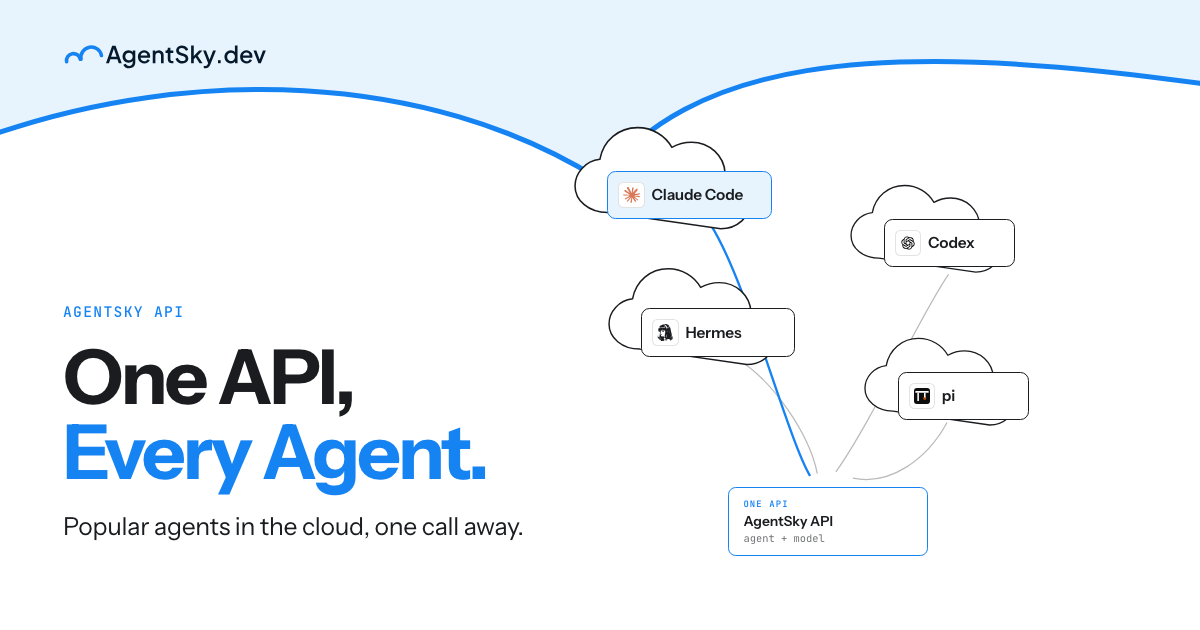


Alternatives to Wren AI
View all →


The Verdict
AI-generated from listing dataWren AI offers strong data governance and open‑core flexibility for data‑centric teams, while Epsilla provides a no‑code, vertically‑focused AI agent platform with broader deployment options.
Key differences
- •Wren AI centers on governed, SQL‑driven data access with row/column security; Epsilla focuses on no‑code agent building and RAG services.
- •Wren AI supports 20+ databases via in‑place querying; Epsilla’s connector list and supported data sources are not specified.
- •Wren AI is open‑core with transparent governance features; Epsilla is a SaaS‑first platform with SOC 2 Type 1 certification.
- •Deployment: Wren AI can run in cloud, VPC, or air‑gapped on‑prem; Epsilla offers managed SaaS, on‑premise, and private cloud but details are limited.
- •Pricing transparency: Wren AI does not publish prices; Epsilla provides freemium and tiered pricing but exact enterprise costs require contact.
Pricing & value
Epsilla lists freemium and tiered plans ($29‑$2,499/mo); Wren AI pricing is unknown, requiring sales contact.
Ease of use / learning curve
Epsilla’s no‑code drag‑and‑drop builder targets non‑technical users; Wren AI needs semantic modeling and engineering effort.
Features & depth
Wren AI provides row/column security, versioned MDL, 20+ DB connectors, audit logs; Epsilla’s feature list is less data‑governance focused.
Integrations & ecosystem
Wren AI integrates with major LLMs (ChatGPT, Claude, Gemini) via MCP and supports many databases; Epsilla’s harness list is limited and connectors unspecified.
Collaboration
Wren AI offers UI, Slack, Teams, embeddable iframe/API for shared dashboards; Epsilla mentions agent management but no explicit collaboration tools.
Scalability
Both support enterprise‑scale deployments (Wren AI air‑gapped, Epsilla SaaS/on‑premise); specific scalability metrics not provided.
Security & privacy
Wren AI has SOC 2, row/column security, signed JWTs; Epsilla has SOC 2 Type 1 but lacks detailed data‑level controls.
Choose Epsilla if…
Non‑technical business units wanting rapid, no‑code AI agent creation with built‑in RAG and flexible SaaS/on‑prem deployment.
Choose Wren AI if…
Data‑oriented teams needing strict governance, multi‑DB access, and open‑core customizability.
Common questions
What is the pricing model for each product?
Wren AI does not publish pricing; it uses seat‑independent, usage‑based plans requiring sales contact. Epsilla offers a free tier and paid plans at $29, $249, and $2,499 per month, with enterprise pricing on request.
Which solution provides stronger data security and governance?
Wren AI includes row‑ and column‑level security, role‑based access, audit logs, signed JWTs, and SOC 2 compliance, whereas Epsilla only lists SOC 2 Type 1 without granular data‑level controls.
Do I need engineering resources to get started?
Wren AI requires initial semantic modeling and MDL definition, plus engineering to set up MCP or embeddings. Epsilla’s no‑code builder lets non‑technical users create agents without code.