


Eye of the Beholder vs The Temple of Elemental Evil
Side-by-side comparison of features, pricing, ratings, and alternatives.
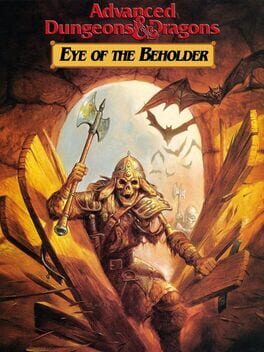
Eye of the Beholder drops you into the labyrinthine sewers and catacombs beneath Waterdeep, using the Advanced Dungeons & Dragons 2nd Edition rules to deliver a deep role‑playing experience. The game blends real‑time combat with strategic party management, letting you guide a band of adventurers through deadly traps and monsters. Built on Westwood Associates' 3‑D engine, the title offers a single‑player fantasy quest that challenges both tactical thinking and classic RPG storytelling, all available on modern PC and Linux platforms.
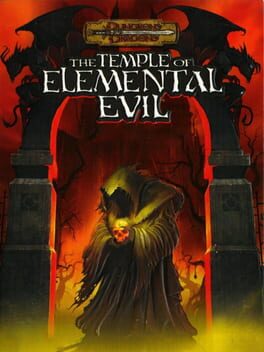
Set in the troubled town of Hommlet, the game opens with a vignette shaped by your party’s alignment, plunging you into a world where rising evil forces threaten a once‑prosperous settlement. As you explore the iconic Temple of Elemental Evil, you must manage a diverse party, uncover hidden lore, and confront classic monsters in a richly detailed fantasy setting. Built on Troika Games’ engine, the title blends turn‑based strategy with role‑playing depth, offering extensive character customization, strategic combat, and a story that reacts to your moral choices. The PC and Mac release preserves the original 2003 experience while remaining fully compatible with modern systems via GOG.
- Authentic AD&D mechanics
- Fully 3‑D environments for its era
- Deep party and inventory management
- Available on both PC and Linux
- Deep adherence to D&D 3.5 mechanics
- Rich, atmospheric isometric graphics
- Extensive character and party customization
- Engaging alignment‑based story
- Outdated user interface by modern standards
- Limited to single‑player only
- Graphics may appear dated on high‑resolution displays
- Single‑player only, no co‑op options
- Interface feels dated by modern standards
- Steep learning curve for newcomers to D&D rules
More alternatives & similar tools
Alternatives to Eye of the Beholder
View all →
First‑person AD&D adventure in a fully 3‑D Forgotten Realms forest


Alternatives to The Temple of Elemental Evil
View all →
Explore Xen'drik and Stormreach in a free-to-play fantasy MMO built on D&D 3.5e rules

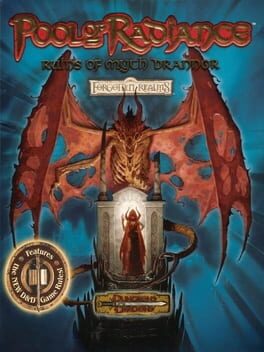
Hack‑and‑slash dungeon crawl through Myth Drannor’s cursed ruins
The Verdict
AI-generated from listing dataBoth are classic single‑player D&D RPGs, but Eye of the Beholder offers real‑time combat with AD&D 2e on PC/Linux, while The Temple of Elemental Evil provides a deeper, turn‑based 3.5e experience on Windows/macOS.
Key differences
- •Combat system: real‑time (Eye) vs turn‑based (Temple).
- •Rule set: AD&D 2nd Edition (Eye) vs D&D 3.5 Edition (Temple).
- •Party size: up to 4 characters (Eye) vs up to 6 characters (Temple).
- •Platform support: PC & Linux (Eye) vs Windows & macOS (Temple).
- •Narrative depth: single linear campaign (Eye) vs alignment‑based branching story (Temple).
Gameplay & fun factor
Temple’s turn‑based tactical combat and 3.5e depth give more strategic variety than Eye’s real‑time system.
Platform availability
Both support two major OS families; Eye has PC/Linux, Temple has Windows/macOS.
Pricing & value
Both are one‑time purchases; Eye’s price not specified, Temple listed at $39.99.
Multiplayer / co‑op
Both are single‑player only.
Content & replayability
Temple offers branching alignment‑based narrative and larger party customization, increasing replay value.
Difficulty & accessibility
Both have dated interfaces; Temple has a steep D&D 3.5 learning curve, Eye’s real‑time may be less forgiving.
Graphics & performance
Temple’s hand‑drawn isometric art is generally clearer on modern displays than Eye’s 1991 3‑D graphics.
Choose Eye of the Beholder if…
Ideal for players who prefer real‑time action, AD&D 2e authenticity, and need Linux support.
Choose The Temple of Elemental Evil if…
Best for those seeking deep tactical turn‑based play, extensive customization, and a branching story.
Common questions
What operating systems does each game run on?
Eye of the Beholder runs on PC and Linux; The Temple of Elemental Evil runs on Windows and macOS.
Which game uses a more modern D&D rule set?
The Temple of Elemental Evil uses D&D 3.5 Edition; Eye of the Beholder uses AD&D 2nd Edition.
Is there any multiplayer or co‑op option?
No, both titles are single‑player only.