


Pool of Radiance: Ruins of Myth Drannor vs The Temple of Elemental Evil
Side-by-side comparison of features, pricing, ratings, and alternatives.
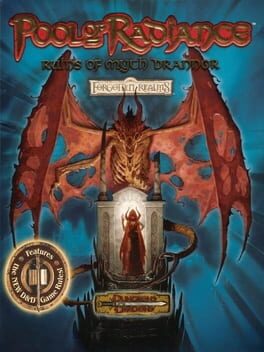
Explore the sprawling dungeons beneath the ancient elven city of Myth Drannor in this action‑packed RPG. Fight hordes of monsters, wield powerful spells, and uncover the dark secret of the dracolich and his sorceress queen. Guided by Elminster, four heroes must battle through catacombs, city streets, and hidden chambers to stop the Mythal’s corruption and save Faerûn from looming domination.
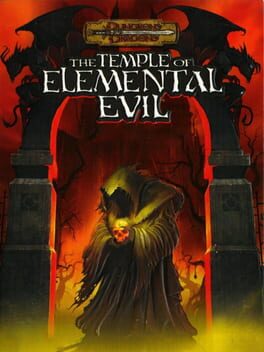
Set in the troubled town of Hommlet, the game opens with a vignette shaped by your party’s alignment, plunging you into a world where rising evil forces threaten a once‑prosperous settlement. As you explore the iconic Temple of Elemental Evil, you must manage a diverse party, uncover hidden lore, and confront classic monsters in a richly detailed fantasy setting. Built on Troika Games’ engine, the title blends turn‑based strategy with role‑playing depth, offering extensive character customization, strategic combat, and a story that reacts to your moral choices. The PC and Mac release preserves the original 2003 experience while remaining fully compatible with modern systems via GOG.
- Deep dungeon exploration with varied layouts
- Responsive hack‑and‑slash combat system
- Co‑op multiplayer supports up to four players
- Rich fantasy lore tied to the Forgotten Realms
- Deep adherence to D&D 3.5 mechanics
- Rich, atmospheric isometric graphics
- Extensive character and party customization
- Engaging alignment‑based story
- Story progression is minimal and can feel thin
- NPC interactions are limited and repetitive
- Graphics are dated compared to modern titles
- Single‑player only, no co‑op options
- Interface feels dated by modern standards
- Steep learning curve for newcomers to D&D rules
More alternatives & similar tools
Alternatives to Pool of Radiance: Ruins of Myth Drannor
View all →Alternatives to The Temple of Elemental Evil
View all →
Explore Xen'drik and Stormreach in a free-to-play fantasy MMO built on D&D 3.5e rules
Hack‑and‑slash dungeon crawl through Myth Drannor’s cursed ruins
The Verdict
AI-generated from listing dataPool of Radiance offers fast hack‑and‑slash co‑op for up to four players, while Temple of Elemental Evil delivers a deep, turn‑based single‑player D&D 3.5 experience.
Key differences
- •Co‑op vs. single‑player only
- •Combat style: real‑time hack‑and‑slash vs. turn‑based tactical
- •Rule system: original RPG mechanics vs. faithful D&D 3.5 adaptation
- •Graphics: dated 2001 engine vs. hand‑drawn isometric art
- •Character party size: 4 heroes vs. up to 6 characters
Gameplay & fun factor
Pool of Radiance emphasizes fast‑paced hack‑and‑slash combat with combos, appealing to action‑oriented players.
Platform availability
Temple of Elemental Evil runs on Windows and macOS via DRM‑free GOG; Pool of Radiance only listed for its 2001 release platform.
Price & value
Both are one‑time paid titles; no price details provided for Pool of Radiance, making direct comparison impossible.
Multiplayer / co‑op
Pool of Radiance supports online co‑op for up to four players; Temple of Elemental Evil is single‑player only.
Content & replayability
Temple offers extensive party customization, alignment‑based branching narrative, and procedural combat depth, enhancing replay value.
Difficulty & accessibility
Pool of Radiance’s real‑time combat is generally more accessible than Temple’s steep D&D 3.5 learning curve.
Graphics & performance
Temple’s hand‑drawn isometric graphics are praised as rich and atmospheric, whereas Pool of Radiance’s graphics are described as dated.
Choose Pool of Radiance: Ruins of Myth Drannor if…
Players who want cooperative, action‑focused dungeon crawling with up to four friends.
Choose The Temple of Elemental Evil if…
Players seeking a deep, tactical, single‑player D&D 3.5 experience with extensive customization.
Common questions
Can I play either game with friends?
Pool of Radiance supports online co‑op for up to four players; Temple of Elemental Evil has no multiplayer.
Which game has more complex D&D rules?
Temple of Elemental Evil uses a faithful adaptation of D&D 3.5 rules, offering deeper mechanical complexity.
Are the graphics modern?
Both are older titles; Temple’s hand‑drawn isometric art is considered richer, while Pool of Radiance’s graphics are described as dated.