


Hex vs Mode Analytics
Side-by-side comparison of features, pricing, ratings, and alternatives.


Hex is a cloud‑based data notebook that lets teams write SQL, Python, and R together in a single, shareable workspace. It combines powerful querying with visualizations, letting users turn raw data into interactive dashboards and data‑driven applications. Built for analysts, data engineers, and product teams, Hex integrates with modern data warehouses and supports version control, scheduling, and real‑time collaboration, making it easy to prototype, iterate, and ship data products without leaving the platform.
Mode Analytics is a collaborative platform that lets data teams write SQL queries, run Python notebooks, and create interactive visualizations all in one workspace. It streamlines the process of turning raw data into actionable insights for business decisions. The platform supports version control, sharing, and commenting, enabling analysts, engineers, and stakeholders to work together seamlessly. Integrated data connectors and a robust API make it easy to pull data from warehouses and embed results in reports or dashboards.
- Real‑time multi‑user collaboration
- Supports both SQL and Python/R in one environment
- Native integrations with major cloud warehouses
- Easy publishing of interactive dashboards
- Unified SQL and Python environment
- Strong collaboration and commenting features
- Wide range of native data warehouse integrations
- Easy sharing and embedding of live reports
- Limited offline or desktop client
- Advanced visual customization may require custom code
- Free tier has usage caps on compute
- Limited offline capabilities
- Advanced visual customization may require custom code
- Pricing can be high for large enterprise teams
More alternatives & similar tools
Alternatives to Hex
View all →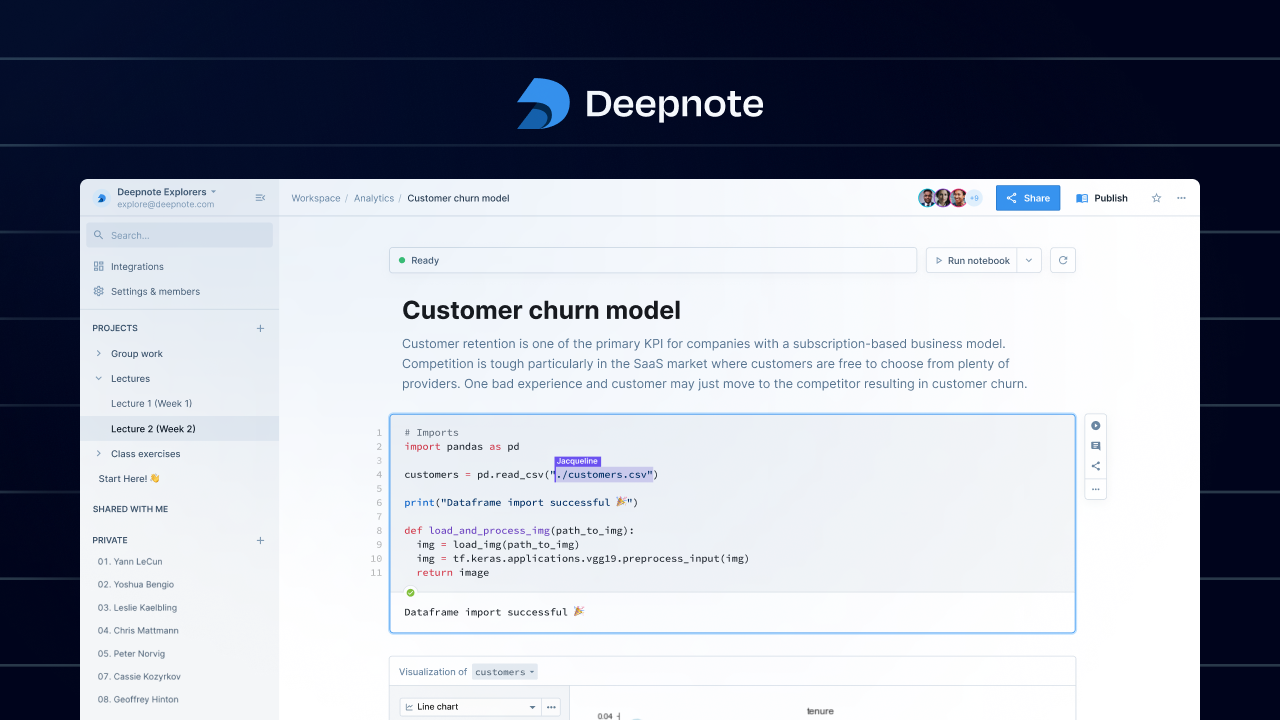

Alternatives to Mode Analytics
View all →

The Verdict
AI-generated from listing dataBoth Hex and Mode offer collaborative, cloud‑based notebooks with SQL and Python, but Hex adds native R support and broader data‑source connectors, while Mode provides a richer knowledge‑base support and Azure Synapse integration.
Key differences
- •Hex supports R code cells; Mode does not mention R.
- •Hex lists built‑in connectors for APIs and S3; Mode focuses on warehouse connections only.
- •Mode includes Azure Synapse as a key integration; Hex does not list it.
- •Support channels differ: Hex offers a community forum; Mode offers a knowledge base.
- •Export options: Hex explicitly mentions PDF/HTML export; Mode does not specify export formats.
Pricing & value
Both products are freemium with unspecified limits; no pricing details to differentiate.
Ease of use / learning curve
Hex combines SQL, Python, and R in one notebook, reducing tool switching for mixed‑language teams.
Features & depth
Hex offers API/S3 connectors, PDF/HTML export, and cell‑level permissions; Mode lacks these specifics.
Integrations & ecosystem
Mode includes Azure Synapse and a broader warehouse list; Hex does not list Synapse.
Collaboration
Both provide real‑time multi‑user editing, comments, and version history.
Scalability
Both are cloud SaaS platforms; no capacity or performance data provided.
Support
Mode offers a knowledge base in addition to email/live chat; Hex only lists email, live chat, and community forum.
Choose Hex if…
Teams needing R support, API/S3 data pulls, or PDF/HTML export.
Choose Mode Analytics if…
Organizations already using Azure Synapse or preferring a knowledge‑base support model.
Common questions
Can I run R code in Mode?
Not specified; Hex explicitly supports R code cells.
Does Hex integrate with Azure Synapse?
Not specified; Hex lists Snowflake, BigQuery, Redshift, but not Azure Synapse.
What export formats are available for notebooks?
Hex offers PDF and HTML export; Mode does not specify export capabilities.