


NeverBlink vs PopSQL
Side-by-side comparison of features, pricing, ratings, and alternatives.


NeverBlink is an AI-native database resilience and optimization platform designed for teams running production databases such as Elasticsearch, OpenSearch, ClickHouse and PostgreSQL. As AI agents increasingly write queries and change schemas, and as product engineers take on data-layer duties without deep DBA expertise, NeverBlink continuously inspects both the infrastructure and how the application uses the database. It then tells teams what to fix, in what priority order, and provides the exact command to run, rather than simply presenting another monitoring dashboard. The platform combines continuous health checks, root-cause analysis and prioritized recommendations, each backed by evidence. Its AI DBA watches every cluster around the clock, and when an issue requires judgment, a senior database engineer from the BigData Boutique team can step in. NeverBlink is deliberately conservative: it recommends and never changes a cluster on its own, leaving engineers in control. It also exposes a REST API and an MCP server so coding agents such as Claude Code and Cursor can reason from live evidence about the data platform. NeverBlink suits engineering and platform teams running self-hosted or managed database clusters who want fewer incidents, lower infrastructure costs and less time spent on database maintenance. Customers such as Frontiers and Aidoc report substantial reductions in management time, faster incident detection and meaningful cost savings. The collector is lightweight, reads only metrics and metadata through a read-only user, and never accesses the rows in the database.
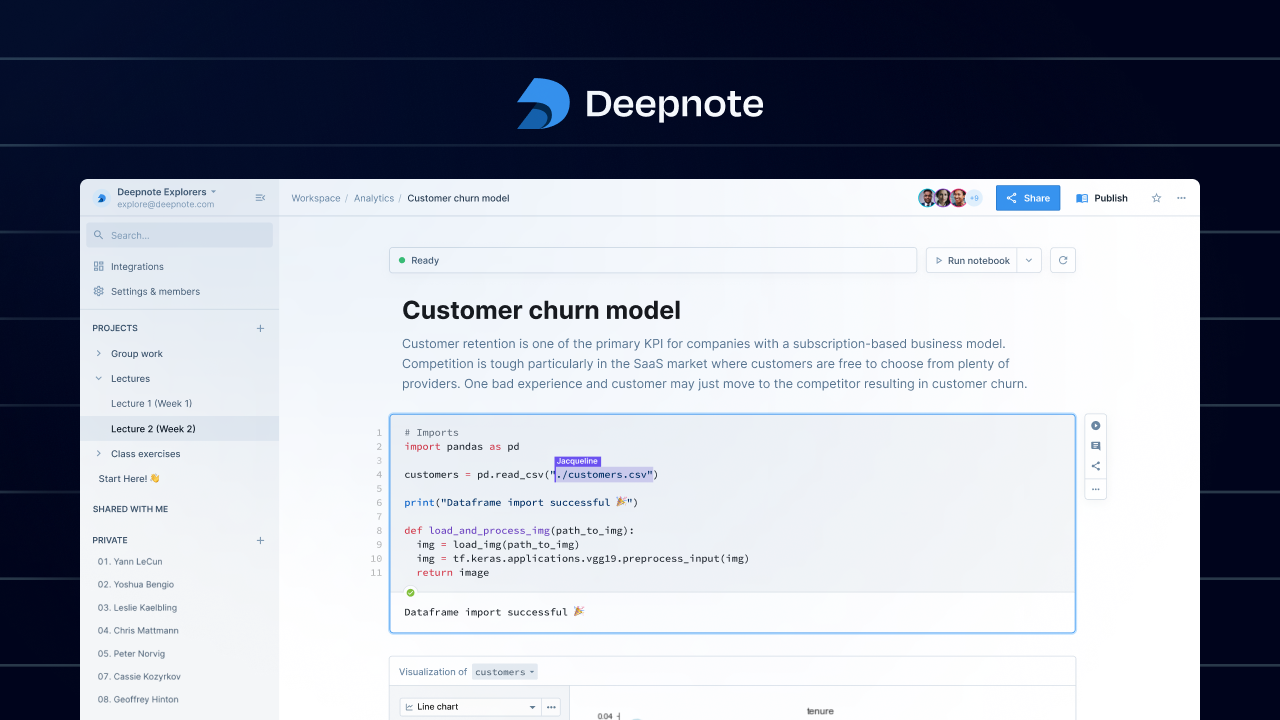
PopSQL is a browser-based SQL editor built for teams rather than individuals, with real-time collaborative editing, inline comments, and version history on saved queries. It connects to most mainstream warehouses and databases including PostgreSQL, Snowflake, BigQuery, MySQL, Redshift, Azure Synapse, and ClickHouse, and adds autocomplete backed by schema and usage statistics so analysts can find the right table faster. Beyond the editor, PopSQL turns query results into charts and lightweight dashboards with variables for self-service filtering, and can schedule queries to refresh on a cadence and post results to Slack. Now part of Timescale (TigerData), it's aimed at data teams that want a shared, searchable home for SQL work instead of queries scattered across individual notebooks and chat threads.
NeverBlink prices per cluster per month across four tiers, with the first cluster on Essentials free, and Premium and Enterprise available by custom quote.
- Recommends specific, evidence-backed fixes with the exact command, rather than just raising alerts
- Continuous 24/7 coverage from an AI DBA with escalation to senior database engineers
- Read-only collector that never reads or stores row data and requires nothing installed on database servers
- Supports major engines including Elasticsearch, OpenSearch, ClickHouse, PostgreSQL and managed services
- Real-time collaborative editing is genuinely useful for data teams working together
- Broad database and warehouse connector support
- Lightweight dashboards avoid needing a separate BI tool for simple reporting
- Viewers are free, so non-technical stakeholders can see results at no extra cost
- Pricing details beyond a starting point of $29 per cluster per month are not fully specified on the page
- Value depends on the team connecting multiple clusters and acting on recommendations
- Cost and outcome figures are customer-reported and not independently verified
- Per-editor pricing adds up for larger analytics teams
- Dashboarding is intentionally lightweight, not a replacement for full BI tools
- Advanced governance features like SSO and audit logs are Enterprise-only
More alternatives & similar tools
Alternatives to NeverBlink
View all →

Alternatives to PopSQL
View all →An AI-native database resilience platform that tells your team what to fix, in what order, and with the exact command to run.


The Verdict
AI-generated from listing dataNeverBlink is a database resilience and monitoring platform that recommends specific fixes with exact commands, while PopSQL is a collaborative SQL editor and lightweight dashboarding tool for data teams. They solve different problems, so the safer default depends on whether your pain is database health or shared query work; the main trade-off is NeverBlink's focus on operations versus PopSQL's focus on analysis collaboration.
Key differences
- •NeverBlink targets database operations (health checks, root-cause analysis, 24/7 AI DBA monitoring), whereas PopSQL targets writing and sharing SQL and simple dashboards.
- •NeverBlink is read-only and never reads or stores row data, with query literals masked; PopSQL's data handling and security posture are not detailed in the provided facts beyond SaaS deployment.
- •NeverBlink lists a starting price of $29 per cluster per month with a free first cluster; PopSQL is freemium with per-editor pricing that the facts say adds up for larger teams.
- •PopSQL offers real-time collaborative editing, inline comments, and scheduled queries posting to Slack, which NeverBlink does not describe.
- •NeverBlink exposes a REST API and MCP server for CI and AI agents; PopSQL offers an API plus Git integration on higher tiers.
Pricing & value
NeverBlink starts at $29 per cluster with a free first cluster; PopSQL's freemium tiers and per-editor costs are not fully specified.
Ease of use / learning curve
PopSQL is a familiar SQL editor with autocomplete and sharing; NeverBlink's setup is quick but its operational outputs target developers.
Features & depth
Each is deep in its own domain: NeverBlink for database health and root-cause analysis, PopSQL for collaborative querying and dashboards.
Integrations & ecosystem
NeverBlink integrates with Slack, email, PagerDuty, REST API and MCP; PopSQL integrates with Slack, Git, PostgreSQL, Snowflake and BigQuery.
Collaboration
PopSQL offers live cursors, inline comments, version history and free viewers for non-technical stakeholders.
Support
NeverBlink includes 24/7 AI DBA monitoring with escalation to senior database engineers; PopSQL's support tiers are not specified.
Security & privacy
NeverBlink lists SOC 2 Type II, SSO/SAML, RBAC, IP allow-listing and no row-data access; PopSQL's SSO and audit logs are Enterprise-only.
Choose NeverBlink if…
Your team runs production Elasticsearch, PostgreSQL or ClickHouse clusters and needs prioritized, actionable fixes.
Choose PopSQL if…
Your data analysts need to write, share and comment on SQL queries together with simple dashboards.
Common questions
How much does each tool cost to start?
NeverBlink starts free for the first cluster and from $29 per cluster per month; PopSQL is freemium, but its per-editor pricing grows with team size.
Can NeverBlink access my actual data?
No. It is a read-only collector that uses metrics and metadata only, never reads or stores row data, and masks query literals.
Do I need a separate BI tool if I choose PopSQL?
Not for simple reporting, since its lightweight dashboards cover basic needs, but PopSQL is not a full BI replacement and advanced governance is Enterprise-only.