


7 Wonders of the Ancient World vs Alchemy
Side-by-side comparison of features, pricing, ratings, and alternatives.
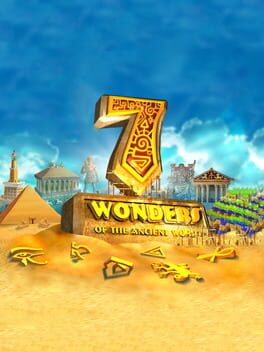

Players reconstruct the legendary Seven Wonders by matching rows of runes across multiple sub‑levels. Each wonder offers 5 to 7 challenging stages where strategic swapping creates rows of three or more identical runes. Two play modes let you test your skills: Free Play lets you revisit any completed level, while Quest Mode guides you through a progressive adventure across all wonders.
Alchemy blends classic puzzle mechanics with strategic rune placement, challenging players to create continuous paths across the board. Each completed path transforms into gold, advancing you to increasingly tricky levels. When you run out of usable runes, you can toss them into the cauldron—but too many mistakes end the game, making every decision count. This single‑player experience captures the charm of the original web classic while offering fresh challenges for modern gamers.
- Engaging historical theme
- Easy-to-learn controls
- Two distinct play modes
- Suitable for children
- Simple yet deep gameplay
- Quick sessions suitable for any schedule
- Clear visual feedback when paths turn to gold
- Single‑player focus eliminates online pressure
- Limited to single‑player
- Graphics are dated
- No online multiplayer
- Limited content after many levels
- No multiplayer or social features
- Graphics are dated compared to newer titles
More alternatives & similar tools
Alternatives to 7 Wonders of the Ancient World
View all →
Match-3 adventure restoring the 7 Wonders of the ancient world
Alternatives to Alchemy
View all →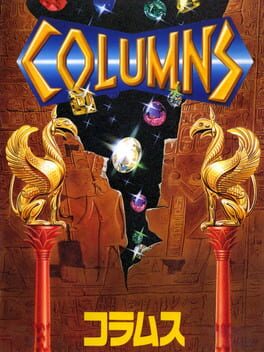
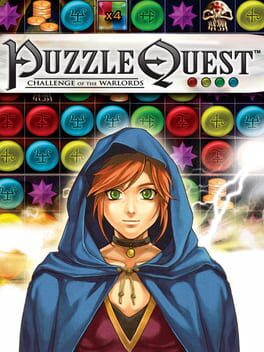
Match crystals, cast spells, and conquer kingdoms in a magical puzzle adventure.
The Verdict
AI-generated from listing dataBoth are one‑time‑purchase, single‑player puzzle games, but Alchemy offers a minimalist rune‑path mechanic with quicker sessions, while 7 Wonders adds a historical theme and two play modes at the cost of slightly more complexity.
Key differences
- •Theme: Alchemy is abstract rune‑to‑gold; 7 Wonders uses historically inspired ancient wonders.
- •Play modes: Alchemy has only a linear progression; 7 Wonders provides Free Play and Quest Mode.
- •Content volume: Alchemy’s difficulty ramps but may run out of fresh levels; 7 Wonders includes 5‑7 puzzles per wonder across seven wonders.
- •Release date: Alchemy (2001) is older than 7 Wonders (2006), potentially affecting polish.
- •Developer pedigree: Alchemy is from PopCap Games; 7 Wonders is a joint effort by Hot Lava Games and MumboJumbo.
Gameplay & fun factor
7 Wonders adds two distinct modes and a historical narrative, offering more variety than Alchemy’s single‑mode path puzzle.
Platform availability
Both listings provide no platform specifics; assume equal availability.
Price & value
Both are one‑time paid titles; Alchemy lists MSRP $9.99, 7 Wonders has no price listed, so value cannot be compared.
Multiplayer / co‑op
Both are single‑player only.
Content & replayability
7 Wonders offers 7 wonders each with multiple puzzles and a Free Play mode for replay; Alchemy may run out of content after many levels.
Difficulty & accessibility
Alchemy’s simple rune‑placement and quick sessions are easier for casual play than 7 Wonders’ layered matching and swapping.
Graphics & performance
Both are described as having dated graphics; no further detail to differentiate.
Choose 7 Wonders of the Ancient World if…
Players who want thematic depth, multiple modes, and more puzzle variety.
Choose Alchemy if…
Casual players seeking short, low‑pressure puzzle sessions.
Common questions
Is either game multiplayer?
No; both Alchemy and 7 Wonders are single‑player only.
Which game offers more replayable content?
7 Wonders, with 5‑7 puzzles per wonder across seven wonders and a Free Play mode.
Do both games cost the same?
Alchemy lists an MSRP of $9.99; 7 Wonders does not specify a price, so exact cost comparison isn’t provided.