


AI Video Translator vs VMEG AI Video Translator
Side-by-side comparison of features, pricing, ratings, and alternatives.
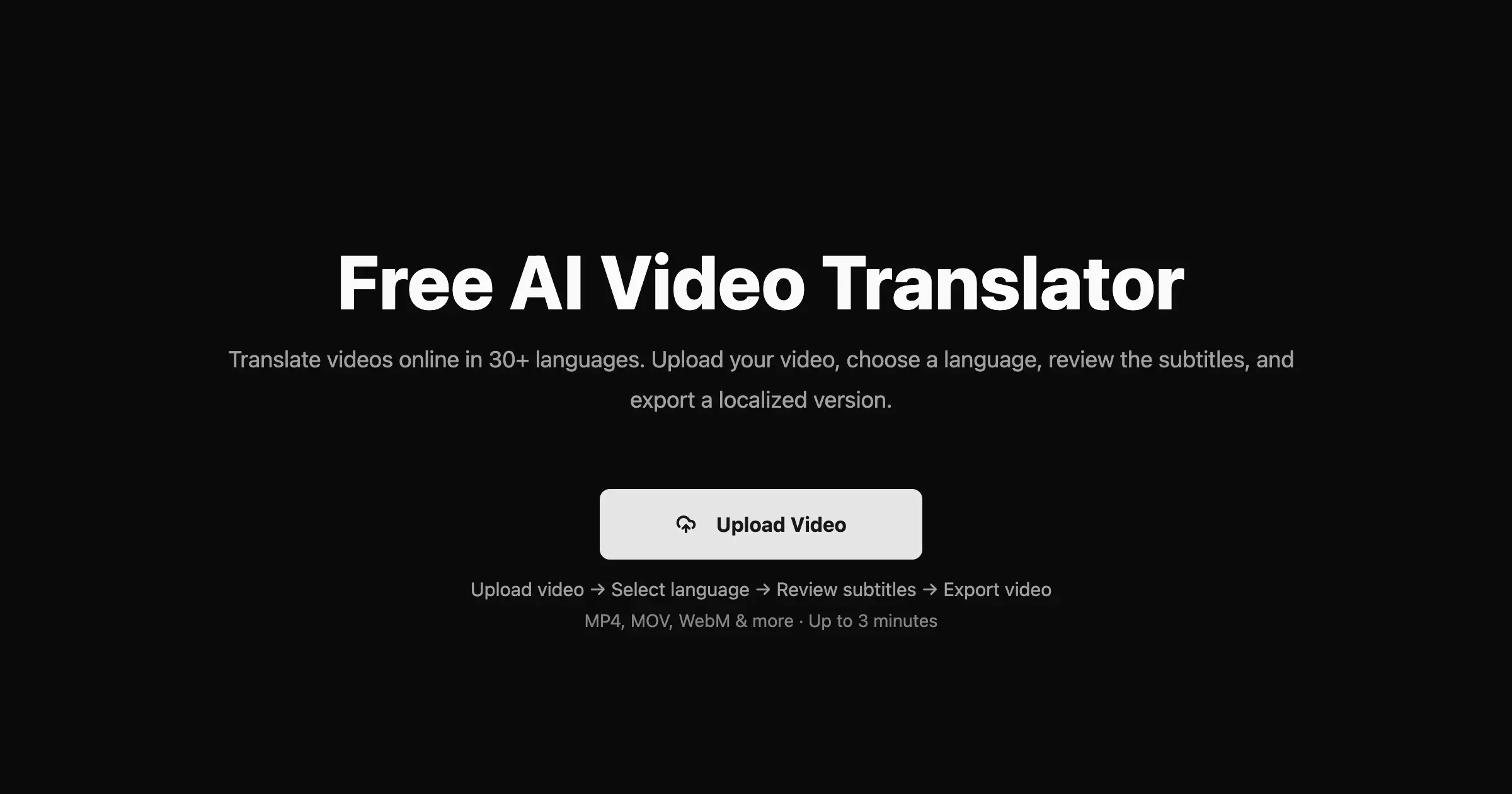
AI Video Translator is an online video localization tool that translates uploaded videos into 30+ languages. It provides editable subtitles, side-by-side translation review, AI dubbing with 300+ voices, speaker detection, and export options including MP4, SRT, and TXT.
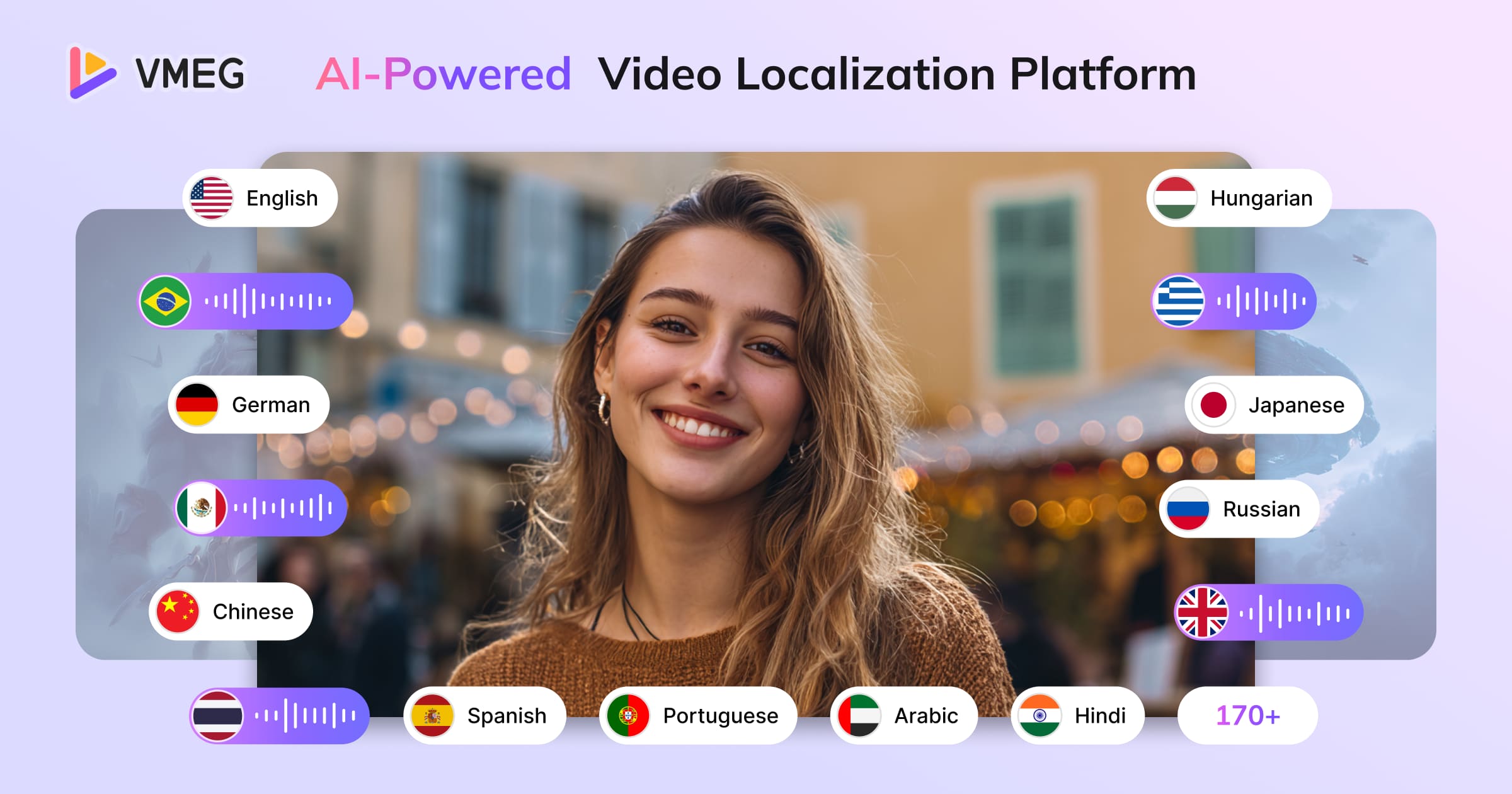
VMEG AI Video Translator is an online localization tool that turns videos in any supported format into multilingual content. It translates spoken content into 170+ languages and offers three main output options: a fully dubbed video, translated subtitles, or a separate audio track. Users can upload a file, paste a supported public video link, or pull an existing project from their workspace, making it flexible for creators, educators, and business teams. At the core of the tool is a studio-style dashboard where users can review translated scripts, edit text, adjust voice speed, volume, and tone, and assign voices per speaker. VMEG leverages 17,000+ AI voices and supports voice cloning to keep speakers recognizable across languages. It also detects multiple speakers in interviews, webinars, and conferences, while background music and non-speech audio can remain separate from the translated dialogue. Lip sync can be enabled to better match translated speech to the speaker's mouth movements. VMEG is positioned as a privacy-first, enterprise-ready platform. Customer data is encrypted using AES-256 at rest and TLS 1.3 in transit, isolated by workspace, and not used to train AI models by default. The tool also includes batch production and automation features, making it suitable for large-scale video localization workflows, global content distribution, and professional production standards.
- Supports 30+ target languages
- Editable line-by-line subtitles
- Side-by-side translation review
- 300+ AI voices for dubbing
- All-in-one localization workflow replaces separate transcription, translation, voiceover, and editing tools
- Supports 170+ languages and 17,000+ AI voices with flexible output formats
- Voice cloning and multi-speaker separation keep dialogue natural and recognizable
- Lip sync alignment makes dubbed videos look more polished and human-like
- Pricing details not clearly listed
- Video length limited to 60 minutes
- AI translation may require manual review for accuracy
- Free plan limitations not specified
- Pricing, credits, and usage limits are not transparent until you sign in to your VMEG account
- Video length and file-size limits depend on your account and processing settings, which can restrict large projects
- Advanced features like lip sync and voice cloning may not be available in every workflow and require exploring the dashboard
- Public video links only work for supported sources and you must have permission to process the content
More alternatives & similar tools
Alternatives to AI Video Translator
View all →
Translate your videos seamlessly in 140+ languages with natural voice clone and preserve authentic speaking styles.

One AI editor to localize any video or audio into 50+ languages through dubbing, translation, captions, and subtitles.
Translate videos into 170+ languages with AI voices, voice cloning, subtitles, and lip-synced dubbing—all in one online studio.
Alternatives to VMEG AI Video Translator
View all →
An AI subtitle generator that automatically transcribes and translates videos into captions in 76 languages in under 3 minutes.
Translate your videos seamlessly in 140+ languages with natural voice clone and preserve authentic speaking styles.

The Verdict
AI-generated from listing dataProduct B offers far broader language and voice options plus advanced features like lip‑sync and strong privacy, while Product A is a simpler, limited‑length tool with fewer languages.
Key differences
- •Language coverage: 30+ vs 170+ target languages.
- •AI voice library: 300+ vs 17,000+ voices.
- •Advanced dubbing: only B provides lip‑sync and voice‑cloning.
- •Privacy/security: B specifies AES‑256 encryption; A provides no details.
- •Video length limit: A caps at 60 minutes; B’s limit is unspecified and account‑dependent.
Pricing & value
Both products list pricing as unknown; no cost data to compare.
Ease of use / learning curve
Neither description provides usability metrics; both are presented as online studios.
Features & depth
B adds lip‑sync, voice cloning, 170+ languages, 17k+ voices, and multi‑speaker detection; A offers basic translation and dubbing.
Integrations & ecosystem
Both list standard video file uploads; no additional integration details are given.
Collaboration
No collaboration features are described for either product.
Scalability
A limits videos to 60 min; B’s limits depend on account but are not stated as a hard cap.
Security & privacy
B specifies AES‑256 at rest, TLS 1.3 in transit, and isolated workspaces; A provides no security information.
Choose AI Video Translator if…
Small‑scale creators needing quick translation of short videos (≤60 min) with basic subtitles.
Choose VMEG AI Video Translator if…
Enterprises or creators requiring extensive language/voice options, lip‑sync dubbing, and strong data privacy.
Common questions
Which tool supports more languages and voices?
Product B supports 170+ languages and 17,000+ AI voices; Product A supports 30+ languages and 300+ voices.
Is there a video length restriction?
Product A caps videos at 60 minutes; Product B’s limit varies by account and is not publicly specified.
What security measures are provided?
Product B uses AES‑256 encryption at rest and TLS 1.3 in transit with isolated workspaces; Product A does not disclose security details.