


Braiv vs Speechlab
Side-by-side comparison of features, pricing, ratings, and alternatives.

Braiv is an AI video packaging and distribution platform that helps creators, podcasters, and businesses turn long-form video into a complete publishing pipeline. Instead of juggling separate editing tools, subscription services, and freelancers, Braiv consolidates short-form clipping, thumbnail and title generation, metadata writing, channel publishing, and localization in one workflow. It is designed for teams and individuals who want to move from raw recording to published, multilingual content in under an hour.
Speechlab is an AI-powered localization and dubbing platform designed for video and audio content. It combines transcription, translation, captioning, subtitling, and dubbing into one unified editor, allowing users to move from raw media to fully localized output without switching between tools. The platform supports more than 50 languages and is aimed at media publishers, marketing teams, corporate learning and development departments, and localization service providers. The product is built around spoken content such as documentaries, podcasts, YouTube videos, audiobooks, product demos, and training modules. Users can start with transcription and then translate, caption, subtitle, or dub as needed. A waveform timeline editor enables segment-level review and correction, while source-clone mode can preserve a speaker's voice characteristics in another language. For multi-speaker content, each speaker can be cloned independently, making it suitable for interviews, panel discussions, and narrative media. Speechlab uses transparent per-minute credit pricing and includes a free tier with two projects. Pro plans add unlimited media length, 4K resolution, sharing for review, and API access. Enterprise plans include bulk processing, API integration, human linguist review, custom voices, role-based access, white-label options, and invoice billing. The platform is designed for teams that need quality control, collaboration, and integration into existing media or translation pipelines.
- All-in-one video packaging, publishing, and localization workflow
- AI generates shorts and thumbnails without requiring manual prompting
- One-click auto-publishing to multiple connected YouTube channels
- Supports 80+ languages with AI dubbing, voice cloning, and lip sync options
- All-in-one editor for transcription, translation, captioning, subtitling, and dubbing
- Multi-speaker voice cloning that preserves original speaker identity
- Support for 50+ languages with native-voice options
- Transparent per-minute pricing with a free tier for new users
- Direct publishing currently supports YouTube only, with more channels coming later
- Full preview, downloads, and publishing require adding a card even on the On Demand plan
- Lower-tier plans limit video length and the number of language tracks
- Workspace collaboration and API integrations are labeled as coming soon, not yet available
- Only 2 free dubbing projects are included before paid credits are required
- Voice cloning availability varies by language pair
- Credit-based pricing can become expensive for long or multi-language content
- White-glove human review and custom voices are reserved for enterprise plans
More alternatives & similar tools
Alternatives to Braiv
View all →
Alternatives to Speechlab
View all →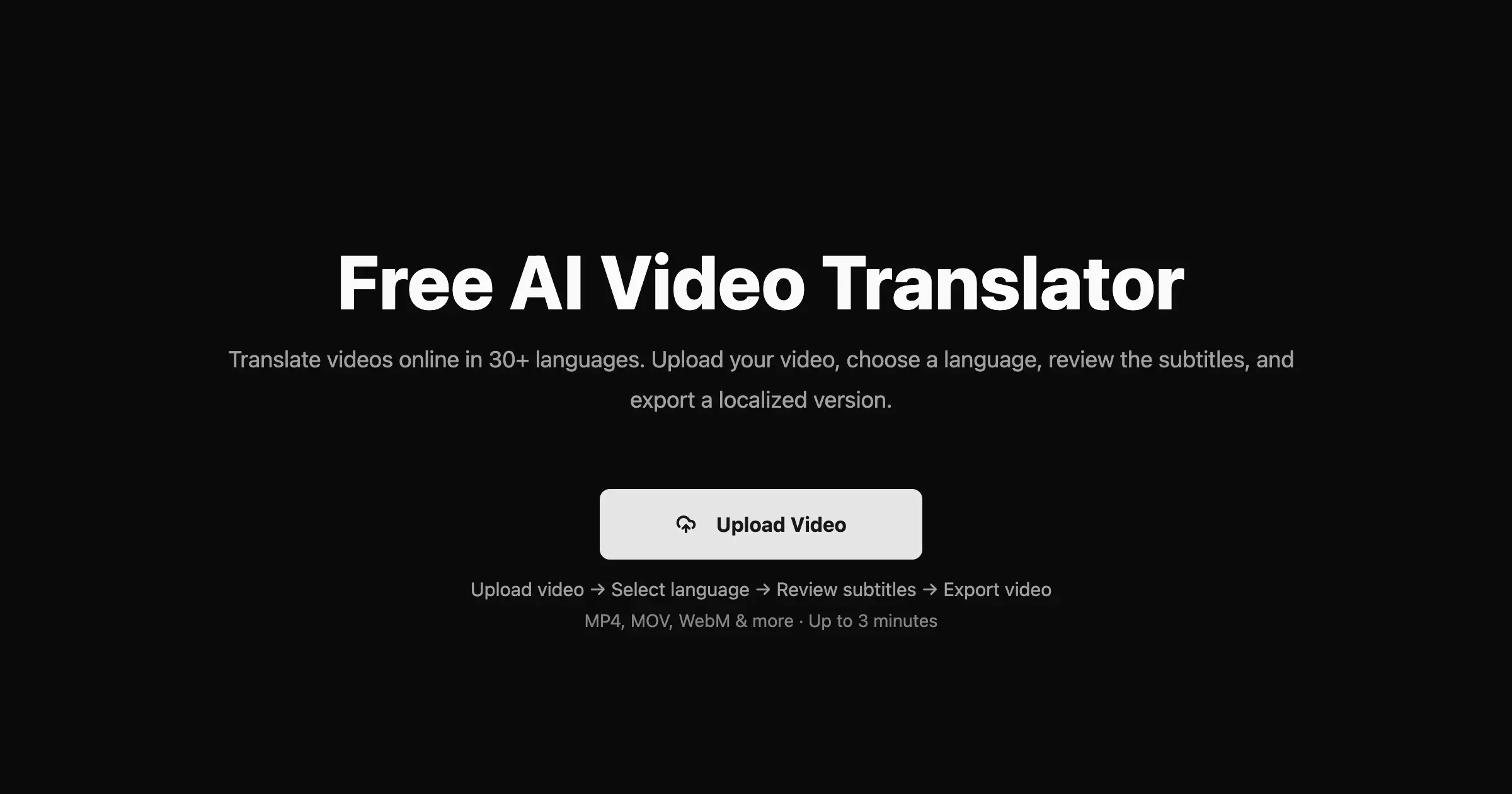

One AI-powered cloud suite to transcribe, subtitle, translate, voice, summarize, and generate video — fast and simple.
Automate shorts, thumbnails, titles, publishing, and localization for every video you create.

AI-powered cinema-grade bilingual subtitles and dubbing that localize video content frame by frame.
The Verdict
AI-generated from listing dataSpeechlab is a dedicated AI dubbing and localization editor with deep multi‑speaker voice cloning, while Braiv is a broader creator suite focused on short‑form generation, thumbnail automation, and YouTube publishing.
Key differences
- •Speechlab offers a full‑featured timeline editor and bulk API for enterprise‑scale dubbing; Braiv lacks an editor and API.
- •Braiv includes AI‑generated shorts, thumbnails, titles and YouTube auto‑publish; Speechlab does not.
- •Speechlab supports 50+ languages with native‑voice options; Braiv claims 80+ languages but focuses on dubbing and lip‑sync only.
- •Speechlab provides per‑minute credit pricing ($0.6/min) and enterprise custom pricing; Braiv uses a freemium credit model starting at $0.02/credit.
- •Speechlab includes SOC 2 security and encrypted storage; Braiv’s security details are not specified.
Pricing & value
Braiv starts free with 150 credits and $0.02/credit; Speechlab costs $0.6 per minute, which can be higher for long content.
Ease of use / learning curve
Braiv’s no‑prompt short and thumbnail generation is turnkey; Speechlab requires editing via a timeline interface.
Features & depth
Speechlab provides multi‑speaker voice cloning, bulk API, human linguist review, and 4K export; Braiv focuses on shorts and publishing.
Integrations & ecosystem
Braiv directly publishes to YouTube and plans more channels; Speechlab offers API but no built‑in publishing.
Collaboration
Both lack detailed collaboration features; Braiv mentions upcoming workspace tools, Speechlab lists role‑based access for enterprise.
Scalability
Speechlab includes bulk processing, batch job tracking, and enterprise‑grade API; Braiv’s scaling limited by credit caps and pending API.
Security & privacy
Speechlab specifies encrypted uploads and SOC 2 compliance; Braiv provides no security specifics.
Choose Braiv if…
Individual creators who want automated shorts, thumbnails, and YouTube publishing with low entry cost.
Choose Speechlab if…
Enterprises or media teams needing precise dubbing, multi‑speaker cloning, and bulk API processing.
Common questions
Which tool is cheaper for a 30‑minute video in multiple languages?
Braiv’s credit model starts at $0.02/credit; Speechlab costs $0.6 per minute, so Braiv is generally cheaper for short content.
Can I integrate the service into my existing video pipeline?
Speechlab offers a RESTful API with batch tracking for integration; Braiv’s API is not yet available.
Do either platforms provide human review for translation quality?
Speechlab offers optional white‑glove human linguist review for enterprise accounts; Braiv does not mention human review.